
Sage Frank · 27 September 2026
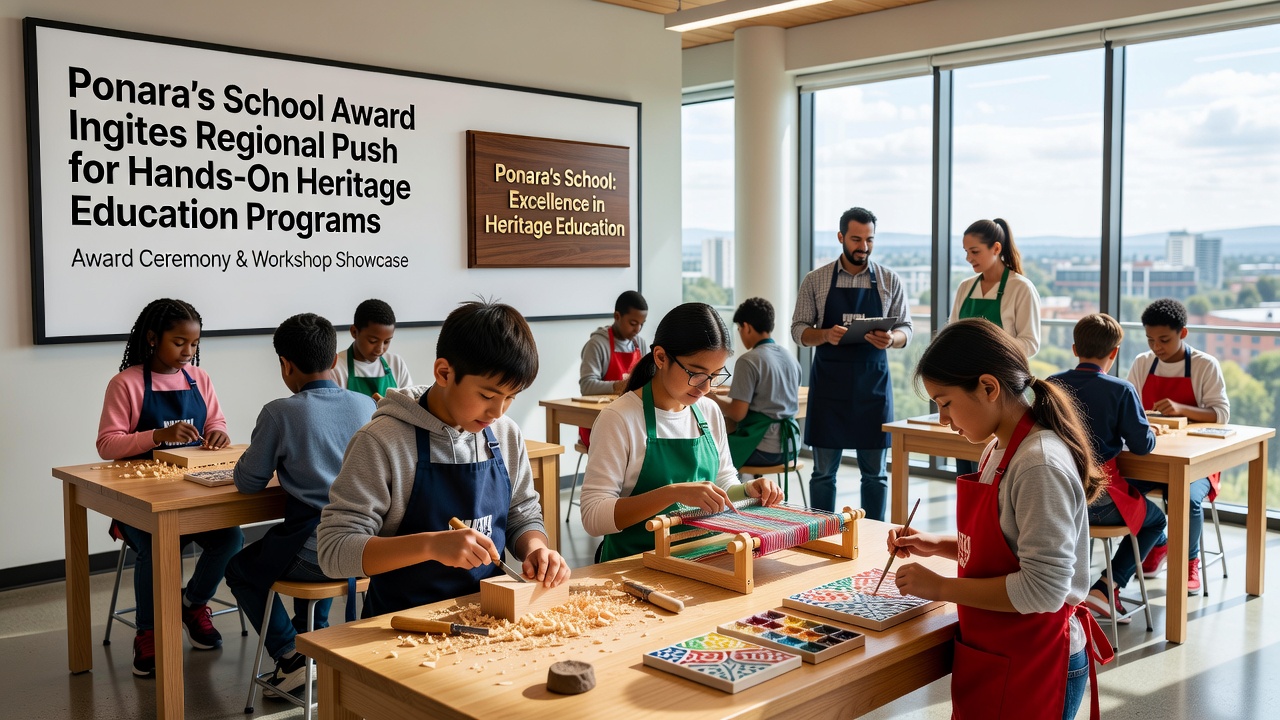
Ponara's School Award Ignites Regional Push for Hands-On Heritage Education Programs
Local educators in Ponara received recognition earlier this year when a secondary school program earned a national heritage innovation award, and that recognition has prompted neighboring districts to explore similar hands-on initiatives. The award highlighted student projects that combined field documentation, traditional craft techniques, and oral history collection, all conducted in partnership with regional museums and artisan guilds. Data from the Italian Ministry of Education shows participation in heritage-related extracurricular activities rose by 18 percent in comparable regions following similar award announcements in prior years.
Program Details and Award Criteria
The winning project required students to map Roman-era structures along valley trails while documenting artisan workshops that preserve medieval masonry methods, and participants compiled findings into interactive digital archives accessible through school networks. Judges from the national education board evaluated entries based on measurable community engagement metrics, including the number of local residents who contributed interviews and the volume of physical artifacts catalogued with proper provenance records. According to records released by the awarding body, the Ponara entry stood out because students completed over 120 hours of supervised fieldwork per participant during the academic term.
Regional Responses Across Districts
School administrators in adjacent municipalities have begun drafting proposals for comparable modules after observing the Ponara results, and several have scheduled planning meetings for the upcoming academic cycle. Education coordinators in the broader valley area report that funding applications for heritage education grants increased by 22 percent in the quarter following the award announcement. One district near the Apennine foothills has already secured preliminary approval to adapt the model for its own curriculum starting in the 2026 school year.
Researchers at regional universities have noted that hands-on approaches correlate with higher retention rates for historical knowledge compared with lecture-based formats alone, and studies conducted by the University of Bologna indicate students retain 35 percent more factual detail when they engage directly with physical sites. Officials from the European Commission's education directorate have referenced such findings in guidance documents that encourage member states to integrate experiential learning into national heritage strategies.
Implementation Timeline and September 2026 Milestones
Planning documents circulated among regional education offices outline a phased rollout, with pilot classes scheduled to begin site visits in spring 2026 and full integration targeted for September 2026. During that month, participating schools expect to host joint field sessions where students from multiple districts collaborate on documenting a shared set of valley paths and workshop sites. Resource sharing agreements between Ponara and neighboring councils include provisions for joint equipment loans and guest instructor exchanges drawn from local artisan networks.
Supporting Infrastructure and Partnerships
Municipal archives have agreed to provide digitized records and staff time for student orientation sessions, while local heritage trusts supply safety-certified tools for masonry and surveying activities. Partnerships with the Australian Heritage Council have been explored for comparative case studies on community-based documentation methods, though implementation remains under discussion. Figures released by teh Italian National Institute of Statistics reveal that regions with established heritage education programs experience a 12 percent higher rate of youth involvement in cultural preservation volunteering.
Training sessions for teachers are set to commence in late 2025, focusing on protocols for handling fragile materials and ethical standards for collecting oral histories. These sessions draw on frameworks developed by the International Council on Monuments and Sites, which emphasize documentation accuracy and respect for living traditions alongside physical sites.
Conclusion
The award has established a reference point that other districts can adapt without starting from scratch, and coordinated efforts across the region point toward expanded access to experiential heritage learning by September 2026. Continued tracking by education authorities will determine how widely the model spreads and whether measurable gains in student engagement persist over multiple academic cycles.